
The biggest VC in Italy just crossed €700M AUM. In the UK that ranking places it around 45th. In Italy it makes you the market.
There are fewer than ten funds actively deploying capital in the third largest economy in Europe that has produced 4 tech unicorns since inception. Let that sit for a moment before we talk about anything else.
I spent the better part of last week in Milan. Meetings at B4i, Bocconi’s accelerator, an afternoon at PoliHub, conversations with M&A advisors embedded in the ecosystem. Also managed to squeeze in a game at Como. Priorities.
The city is extraordinary. Walking through it you feel the weight of everything Italy has built; the design, the fashion, the manufacturing, the food, the architecture.
A civilisation that has been producing world-class things for longer than most countries have existed. And yet when you try to locate the startup energy, the thing that turns all of that into new companies, something doesn’t quite add up.
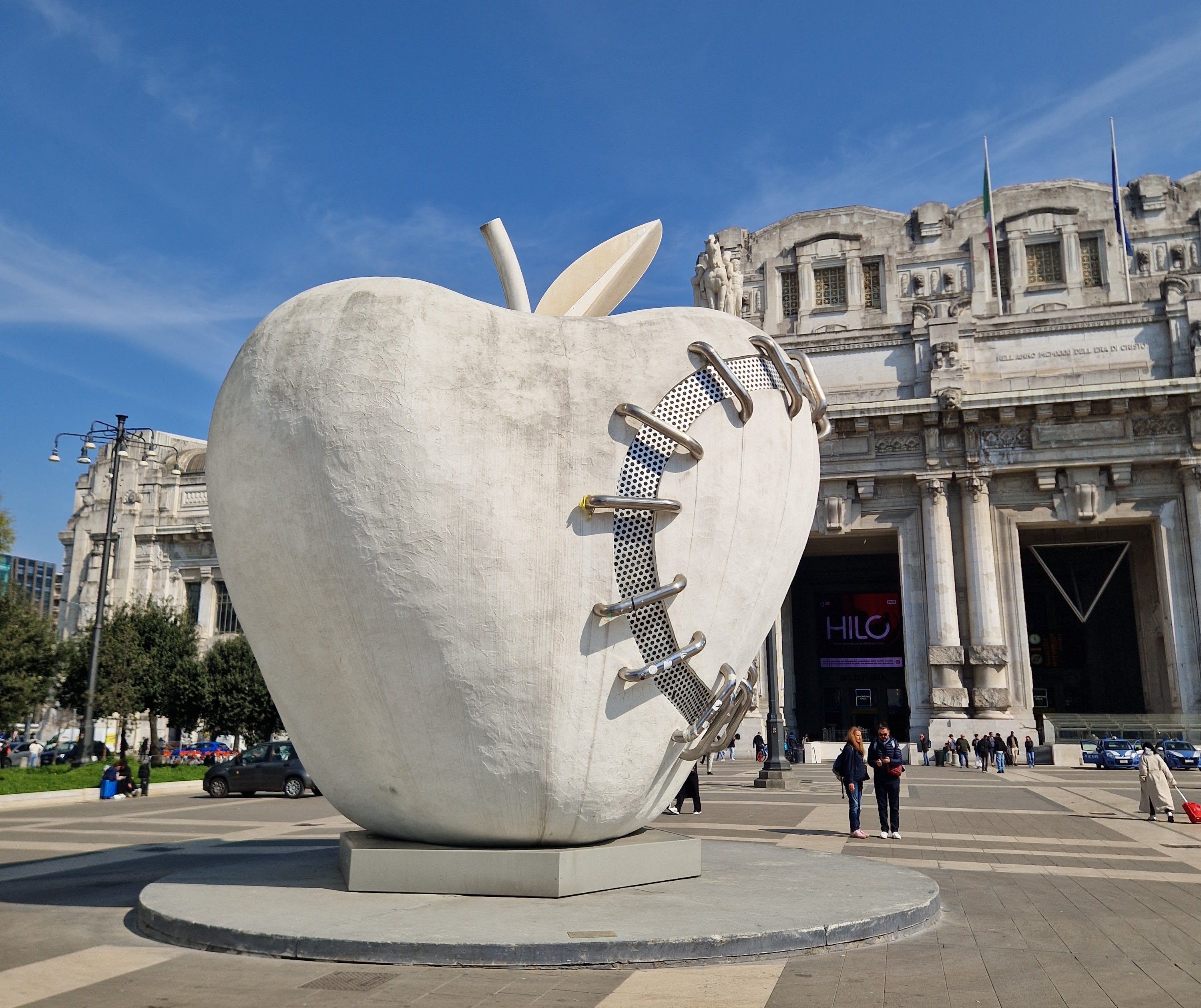
One Coffee Three Patterns
The conversations I had kept returning to the same three frictions.
The first was the big B word. Yep you guessed it, Bureaucracy.
Not just red tape in the abstract but the specific, grinding experience of trying to build something new in a system that wasn’t designed for it and actively pushes back against it. New things get resistance here. The people best equipped to navigate that resistance often leave.
The second is Tax.
And not in the way you might expect.
A friend told me about his experience converting his family's farmland into a solar farm. Higher yield, directly contributing to the green energy transition, exactly the kind of initiative Italy should be incentivising.
Italy recently changed its tax structure so that once the solar farm becomes operational, he and his family will pay income tax on the revenue, not the farm as a business entity, but them personally. Pushing them into the highest income tax bracket regardless of whether the farm turns a profit.
Let me say that again. They could lose money and still get taxed as if they got rich.
If that’s what happens when you take a sensible, productive, environmentally virtuous risk in Italy, you can imagine what the calculation looks like for a first-time founder with no assets, no safety net, and a grandmother lighting candles at church every Sunday hoping they’ll come to their senses and take over the family business.
Which brings me to the third friction. The most interesting one. The one no policy can fix.
It’s Sunday lunch.
Italy has a deeply held cultural logic around wealth. You accumulate it carefully.
You protect it obsessively.
You pass it on to the next generation in better shape than you received it, preferably with a property attached. This isn’t a flaw, it’s a philosophy that has sustained families here for centuries and produced some of the most beautiful things humans have ever made.
The family business fits perfectly inside this logic. Lower risk, immediate cashflow, generational continuity, a known quantity that Nonno built and Papa expanded and now everyone is waiting for you to stop messing around with your laptop and come home.
A contact at PoliHub (Politecnico’s Incubator) put it to me this way me this way: if you had to choose between launching a startup and buying a house, knowing that failing at the first might cost you the second, would you actually do it? In a country where homeownership is cultural bedrock and renting is something you do while you’re waiting to grow up, that’s not a hypothetical. That’s Tuesday.
When the most ambitious of the younger generation were asked what they wanted to build, many said a pizzeria. Or houses to resell. Not because they lacked vision. Because those are the things that work.
Proven models.
Quicker cashflow.
Generational wealth you can hold in your hands, point to at Sunday lunch, and say “I built that.” Nobody can take it from me.
The startup, by comparison, feels like gambling with the inheritance.
And in Italy, you don’t gamble with the inheritance.
To be clear: Italian students at Bocconi and Politecnico are among the sharpest I've encountered anywhere. This isn't a talent problem. It's a system problem.
Compare that to the founders who do leave. Italy produces extraordinary talent that scales globally; just rarely from Italy. The country exports its entrepreneurial energy the same way Lausanne exports its research ambition. The output is world-class. The compounding happens somewhere else.
Which brings me back to Como
I watched Como beat their opponents 5-0 on Tuesday night.
It’s one of the fastest growing clubs in Italian football, going from the second division to Champions League contention in under two years. A genuine success story. A rising star in a country that loves football more than almost anything.
They didn’t play a single Italian all season.
The most dynamic, fastest-scaling institution in Italian sport right now is built almost entirely on imported talent.
The irony is almost too neat. Italy produces world-class infrastructure, world-class passion, world-class everything, and then watches someone else build the winning team inside it.
That’s not a football problem. That’s the pattern.
The Gulf is spending billions on exactly what Italy has spent centuries perfecting. Urban development, design, manufacturing, luxury, built environment. The appetite is there. The introduction hasn’t happened yet.
Milan feels like an old melancholic analogue cassette tape of truly wonderful hits playing in a digital world. The music is still beautiful. The question is whether anyone is building the device to play it to a new audience.
I think they should be.
More from the European road soon. Next stop: Paris.
If this is the kind of thinking you want in your inbox, subscribe below.